


Connector Element for Joining Glass and Wood
Background
The research field of wood–glass composites has become a dynamic segment of modern construction, where new technical solutions are being developed and novel applications are being defined. Existing wood–glass composites range from load-bearing beams to floor/roof panels and wall panels. When joining glass and wood using self-tapping screws, an additional structural element is required to transfer the forces from the screws to the glass while keeping stress levels in the glass low.
Description of Invention
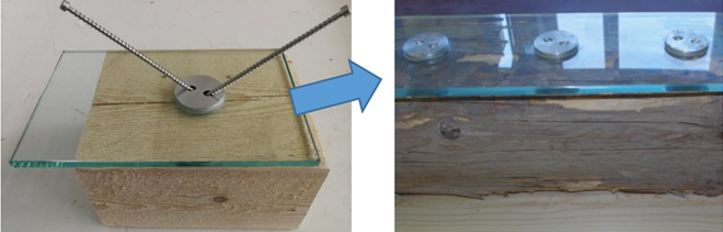
Researchers at the University of Maribor have developed a new connector element for joining glass components to wooden elements using self-tapping screws. The new connector is made of aluminum and can be attached to the glass element using adhesive materials. Self-tapping screws are then driven through the connector into the wooden element.
The new connection is minimally invasive while ensuring sufficient load-bearing capacity and stiffness. Another potential application is the reinforcement of existing wooden structures by adding glass elements, thereby forming wood–glass composites. The motivation for such an approach lies in the possibility of achieving visually unobtrusive reinforcement due to the transparency of glass.
This approach is particularly advantageous in renovation projects, where preserving the originality of structural elements is essential—whether due to architectural heritage requirements or specific demands from architects, owners, or investors.
Main Advantages
The new connection method is minimally invasive while providing sufficient load-bearing capacity and stiffness.